[this page will be updated with translated Spanish text once finalized]
Our Bold Bet
CMU Miami will be a first-of-its-kind, world-class computing institution built from the ground up to provide a new blueprint for higher education in the age of artificial intelligence. Our vision is to harness computing innovation to solve humanity’s most complex grand challenges while equipping the next generation of leaders to thrive and lead in an AI-accelerated economy.
CMU Miami will be uniquely designed to prepare students to thrive and drive the emerging innovation economy while building upon Miami’s existing convergence of talent, capital, global connectivity and real-world relevance.
In launching Carnegie Mellon University Miami, we have the rare opportunity to reimagine what a great university can be in the age of emerging technology. Our answer is an institution that is purpose-built for academic excellence and discovery, grounded in human judgment and dedicated to impact at the scale society now demands.
Farnam Jahanian
President, Carnegie Mellon University
CMU Miami: Powered by the CMU Advantage
Carnegie Mellon brings decades of leadership in inventing transformative technologies and putting them to work in the world. Our deep expertise in advanced computing, AI, robotics, machine learning, and autonomy combines with strengths in science, business, policy, and the intersection of technology and society. An interdisciplinary culture grounded in human-centered values connects these capabilities, bridging discovery and application. CMU Miami will put this established research engine to work – at warp speed – to address society’s defining challenges and strengthen national competitiveness.
Several university deans and faculty members have contributed to the development of CMU Miami so far, including: Jignesh M. Patel, Amy Burkert, Illah R. Nourbakhsh, Jeff Schneider, Lujo Bauer, Keith Cook, Roni Rosenfeld, Jana Kainerstorfer, Costa Samaras, Neil Donahue, Vivian Loftness, Marsha Lovett, Tom Mitchell, Richard Scheines, Vincent Conitzer, Ariel Zetlin-Jones, Jose Moura, and John Lehoczky.
Research Grand Challenge Areas for CMU Miami
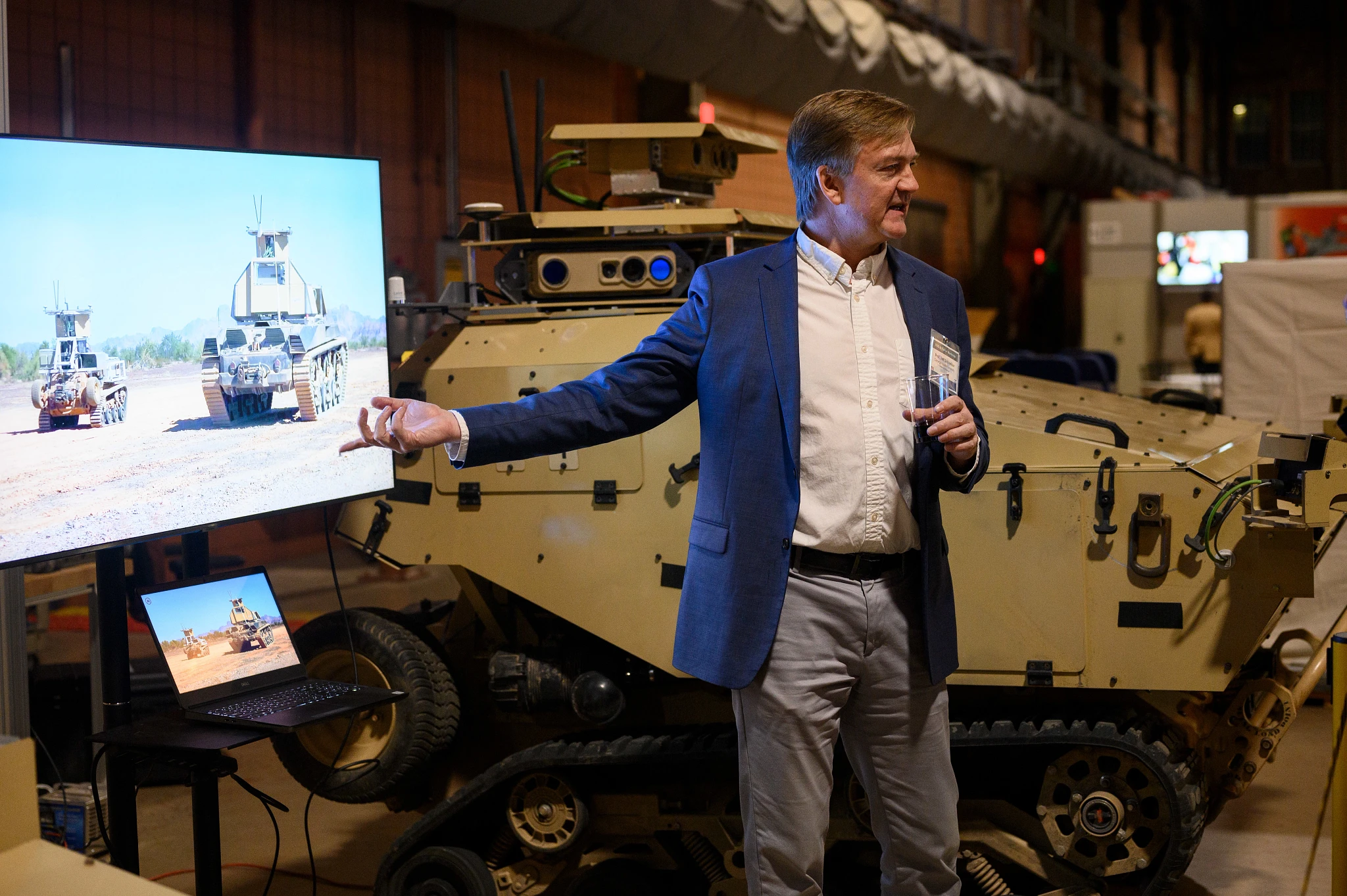
National Security and Strategic Capabilities
Strengthen national defense and cybersecurity to protect people and critical systems across land, sea, air, and space. Areas for research could include robotics and autonomy for national defense; adaptive cybersecurity at machine speed; and new frontiers in space.
Human Health and Biological Discovery
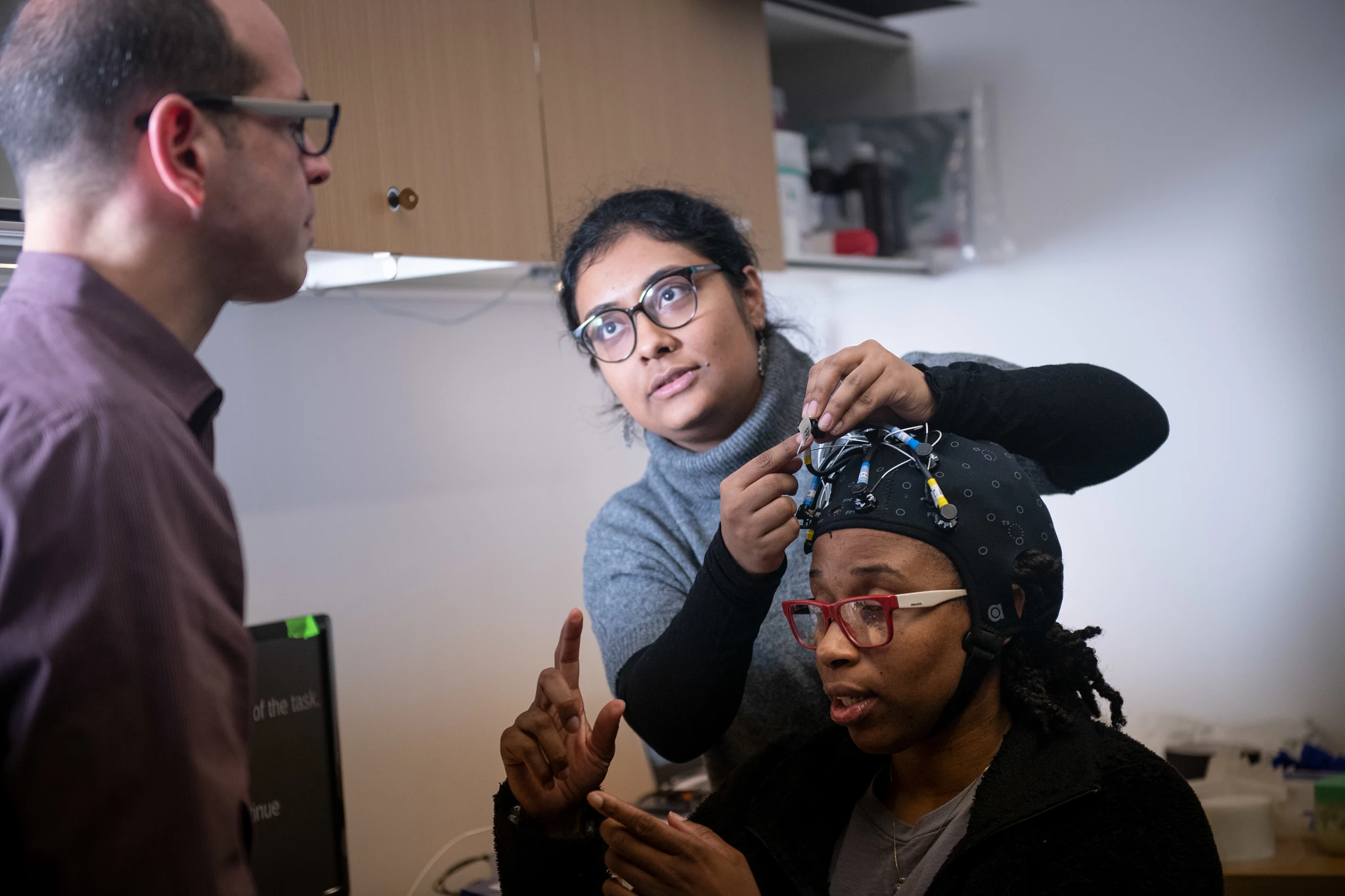
Extend healthy life, restore function, and make effective treatments more personalized and affordable. Areas for research could include proactive health beyond hospital walls; engineered tissues and artificial organs; brain health and restored abilities; computational models of human biology; and autonomous laboratories that run around the clock.
Energy and Climate Resilience
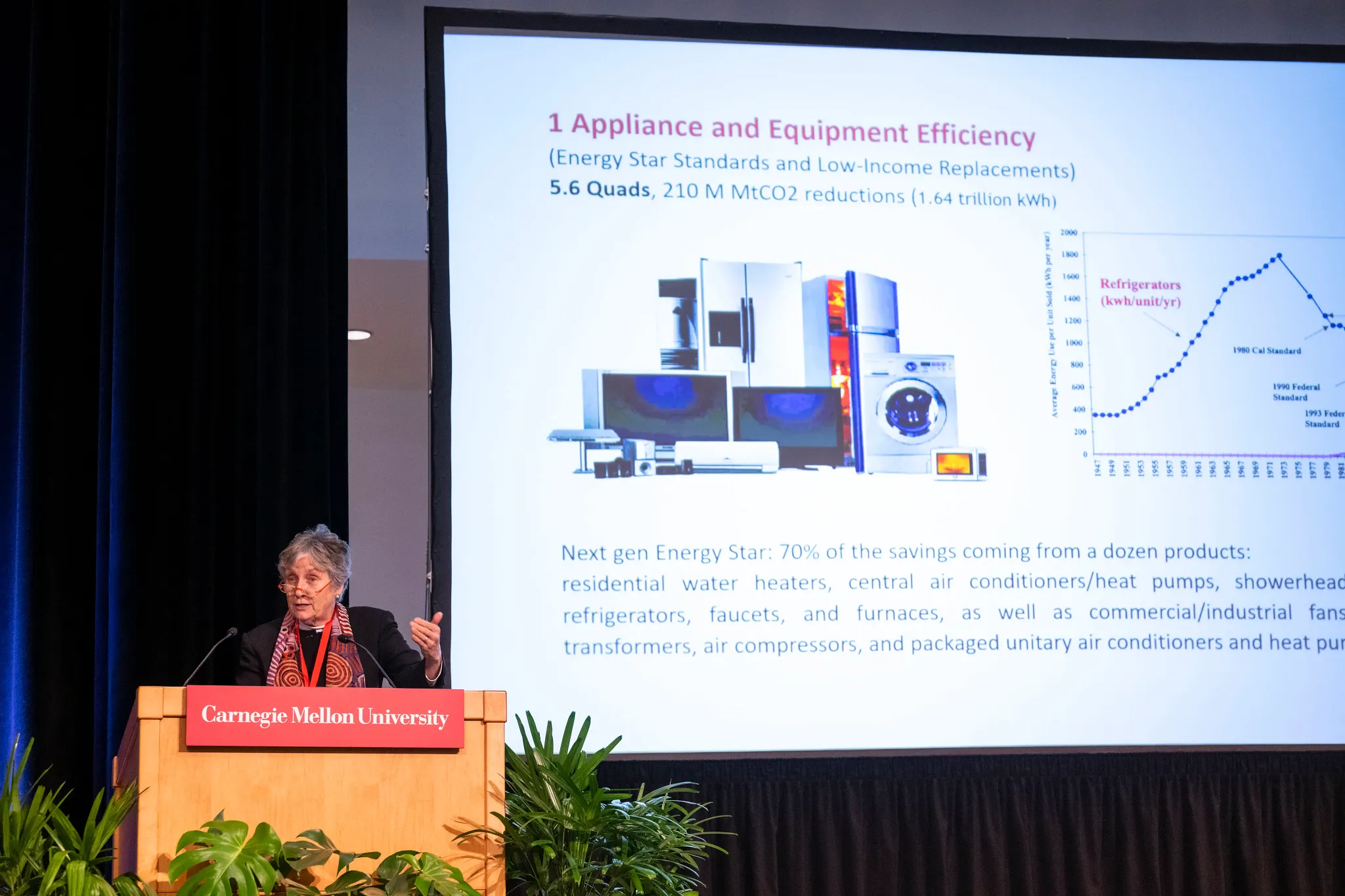
Advance abundant, reliable energy to power economic prosperity and help communities thrive in an evolving climate. Areas for research could include next-generation energy and resilient grids; more competitive, energy-efficient industry; a step change in extreme weather forecasting; regeneration of natural systems; and Miami as a living laboratory.
Advanced Manufacturing and Industrial Transformation
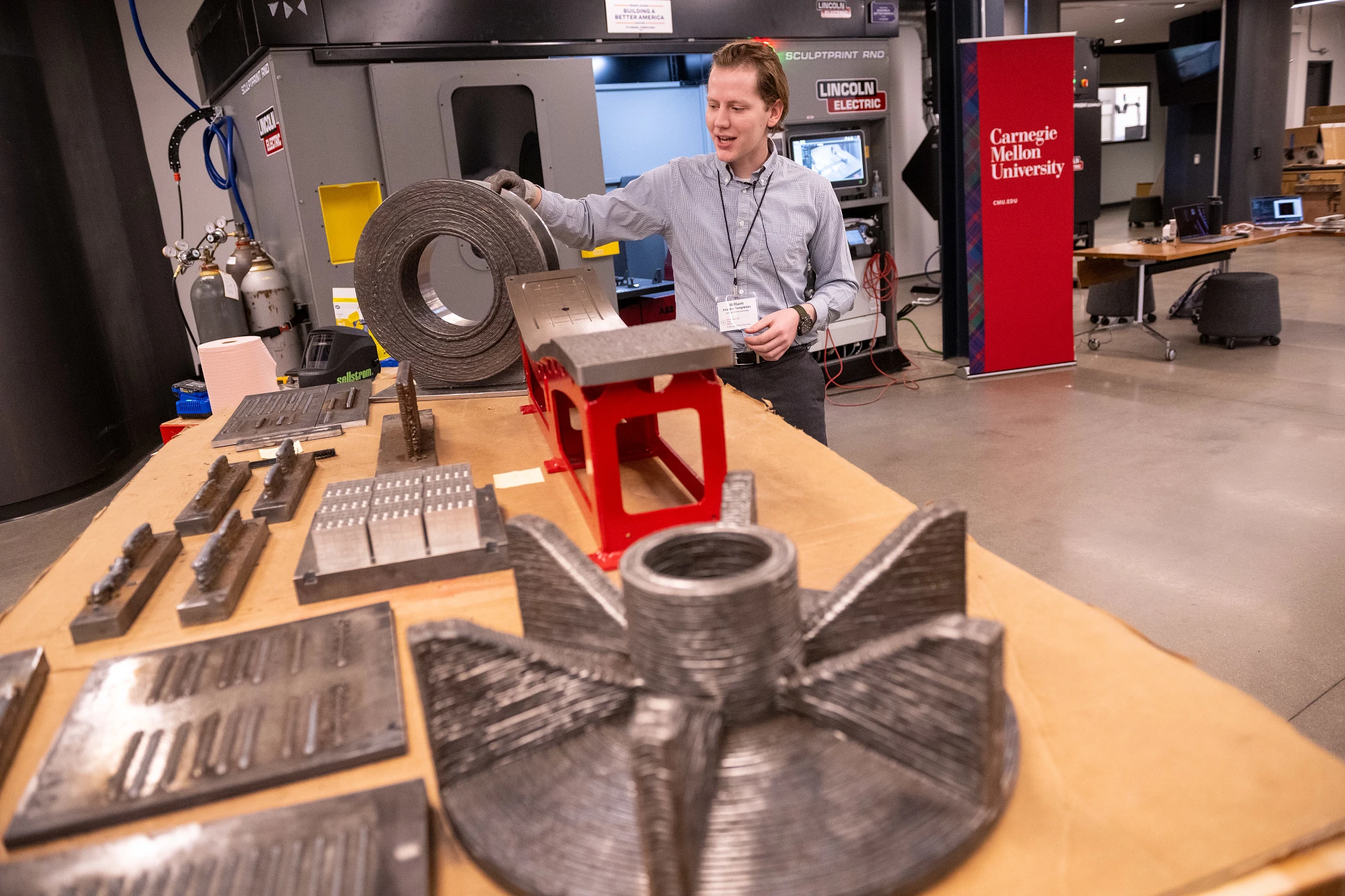
Accelerate manufacturing competitiveness through innovation and policy, with people and technology advancing hand in hand. Areas for research could include advanced materials, robotics, and manufacturing; stronger supply chains and faster industrial growth; factories where people, robots, and AI learn together; new pathways to careers; and a reinvented industrial lifecycle.

CMU Miami represents a generational opportunity to build a new center of research and intellectual life — one that will attract exceptional students, scholars and researchers from across the globe and rank among the world’s most important academic institutions.
Ken Griffin
Founder and CEO, Citadel; Founder, Griffin Catalyst
A Historic Investment
Citadel founder and CEO Ken Griffin has committed more than $3 billion – the largest individual philanthropic investment in higher education – to Carnegie Mellon University. This gift includes $2 billion to support the launch of CMU Miami and $1 billion for CMU’s campus in Pittsburgh, split evenly between the campus’s highest priorities and its School of Computer Science. This school, which will be renamed the Kenneth C. Griffin School of Computer Science, is the No. 1 ranked computer science school in the nation.
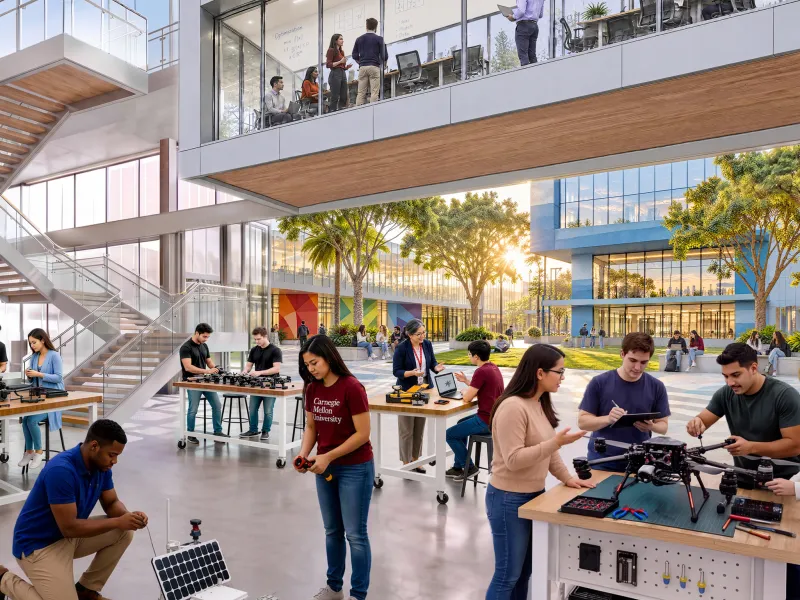
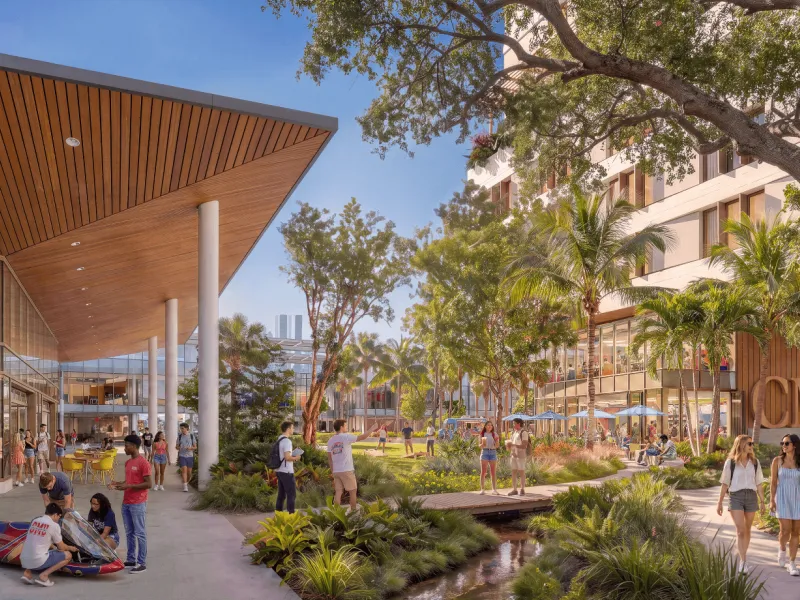
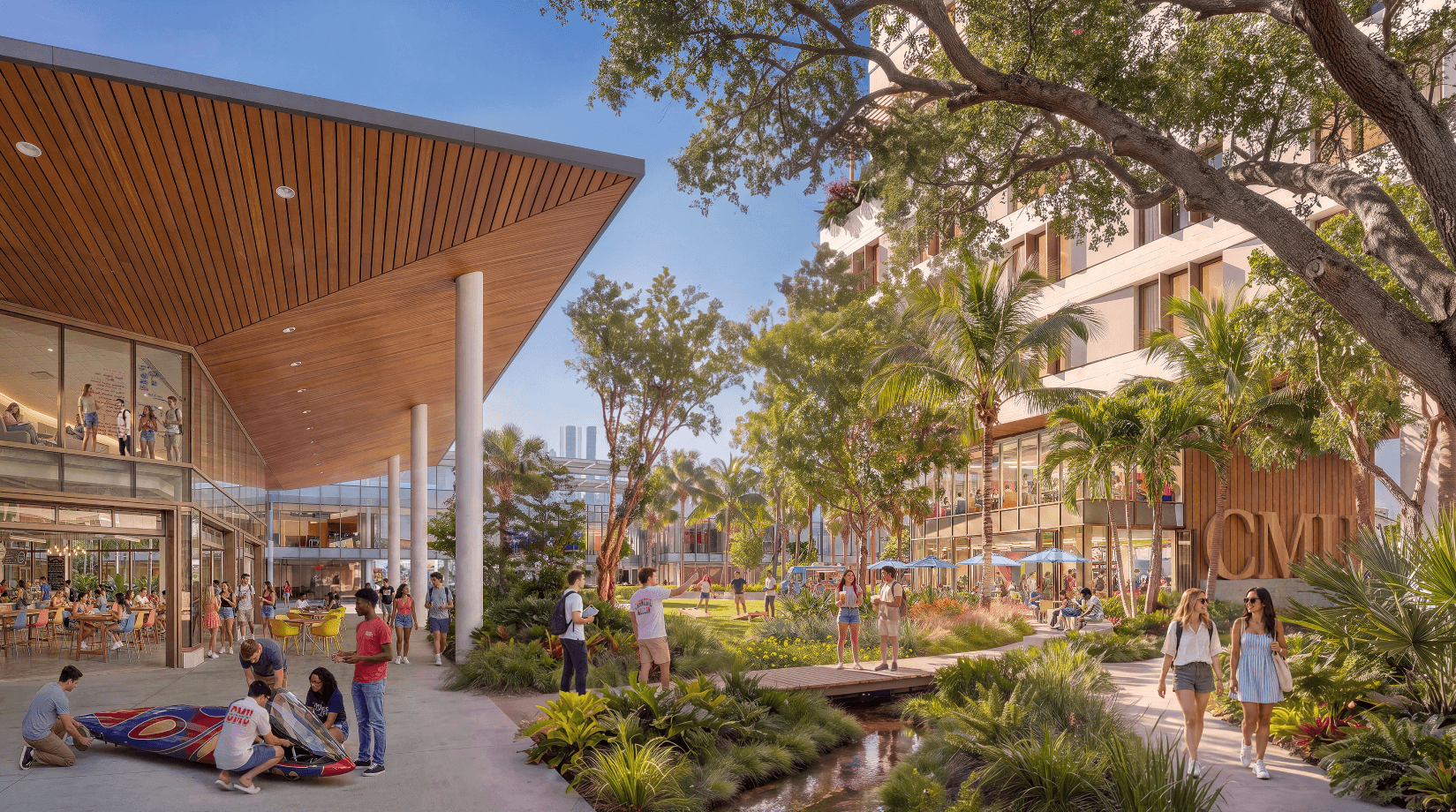
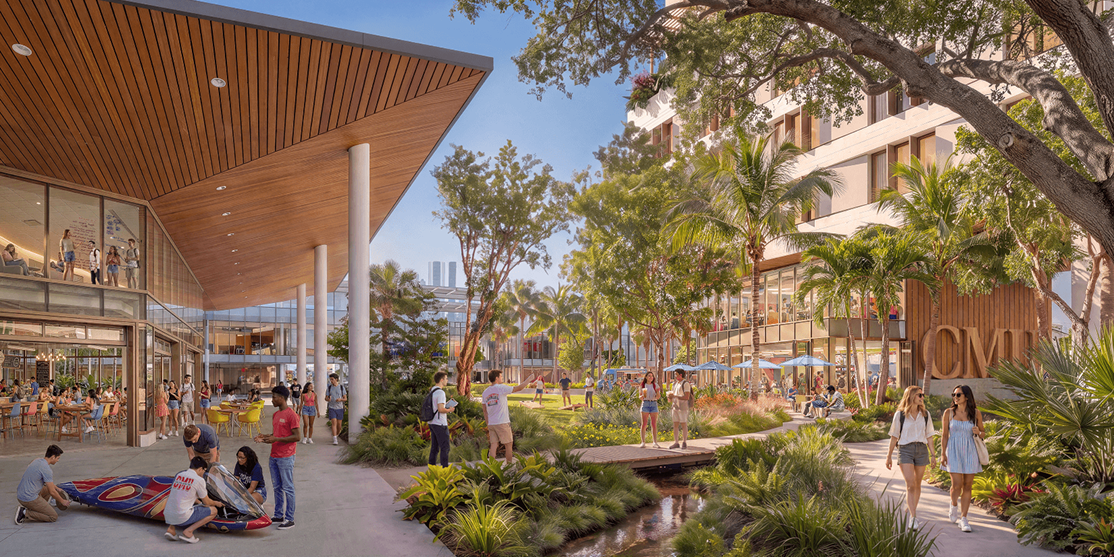
Conceptual rendering. Plans for the campus are subject to necessary regulatory approvals.

Addressing complex societal challenges requires more than bringing different disciplines to the table. It means organizing researchers, shared capabilities and partners in government and industry around challenges that no single institution can solve alone. By connecting research with the work of developing and testing new technologies, we can open new scientific frontiers while delivering advances that strengthen our economy, our security and people’s lives.
Theresa Mayer
Vice President for Research at Carnegie Mellon
How CMU Miami Will Break the Higher Education Mold
It Starts With Problem Solving, Not Subject Silos
CMU Miami will organize learning and inquiry around societal challenges rather than academic majors alone. Disciplines still matter. But the biggest breakthroughs happen when students and faculty can move across them.
It Recognizes That Technology is Powerful, but Human Judgment is Essential
AI and emerging technologies are reshaping how people learn, work and discover–and the pace and scale of change is unprecedented. At CMU Miami, advanced computing will be combined with science, engineering, policy, business, design, the arts and humanities because cutting-edge technologies require human talent.
It’s Built for the Pace of Today
CMU Miami is both unmistakably Carnegie Mellon and something new–a campus that will be designed from the ground up to meet the pace of change in the age of advanced technology.
Why Miami?
Miami brings people, cultures and ideas together from around the world. For a university that thrives on connecting different perspectives, that is an extraordinary environment.
Miami’s international connections provide a gateway to the Western hemisphere. This is an opportunity to bring more talent and perspectives into our work, and to connect CMU students and discoveries with more of the world.
Pittsburgh is the foundation that makes this possible. Miami opens a new horizon for what CMU can achieve. Connecting the two will create opportunities that strengthen the entire university, help expand the region’s existing capacity for innovation, and create more opportunities for local students.
Benefits to Pittsburgh
One billion dollars will support CMU in Pittsburgh, split equally between the university’s highest priorities and the Kenneth C. Griffin School of Computer Science.
Pittsburgh remains the heart of Carnegie Mellon. Everything CMU will build in Miami grows from the talent, creativity and decades of work in Pittsburgh, combined with Miami's established higher education ecosystem. The ambition is to strengthen our home campus and create new opportunities in Miami and across the entire global university.
Five Things to Know About Miami’s Wynwood Neighborhood
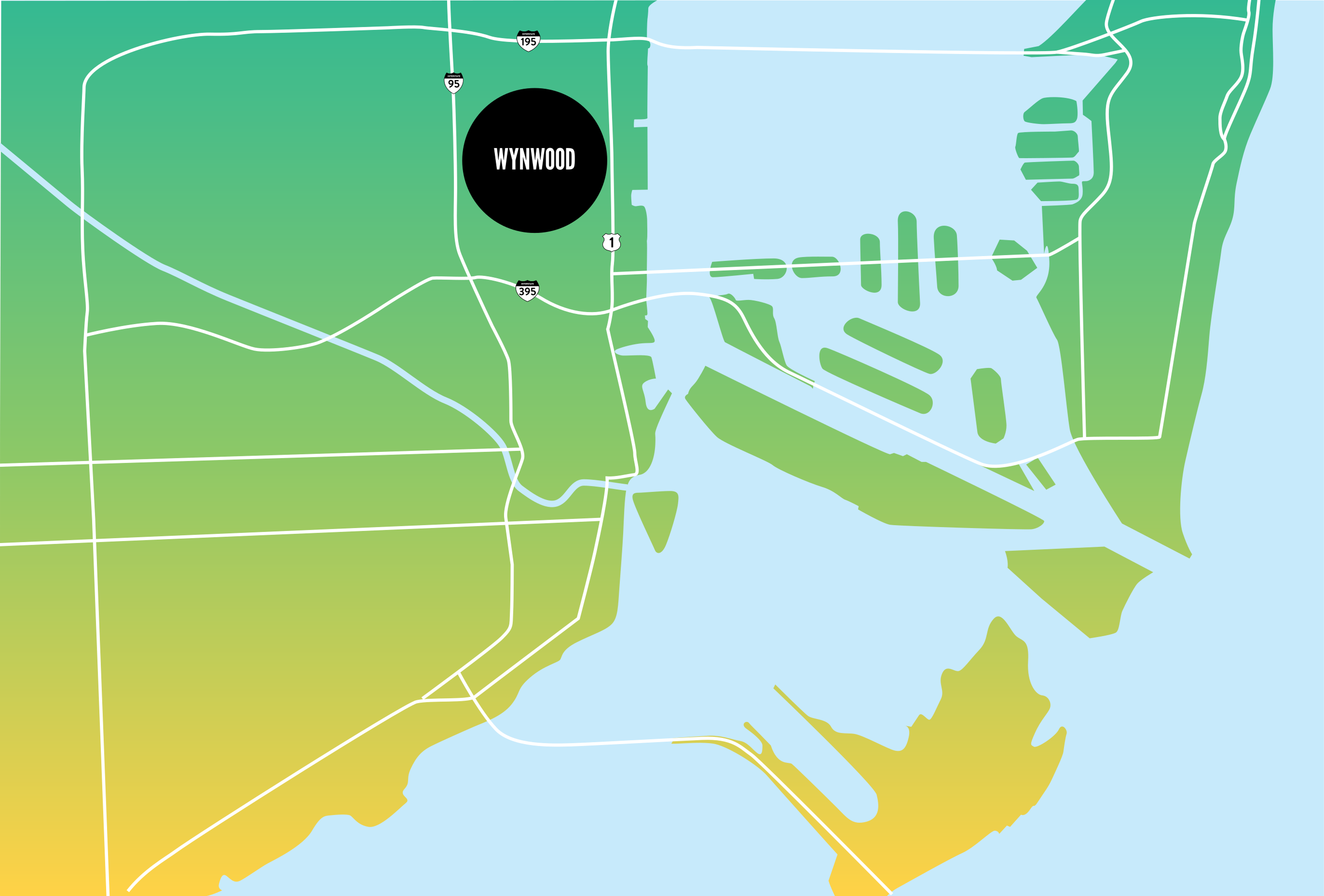
Wynwood is a small neighborhood in Miami, just north of downtown. Known internationally for its murals and galleries, it has evolved from an industrial and immigrant neighborhood into an arts destination, entrepreneurial hub and rapidly growing mixed-use district.
1. It was Miami’s garment district before it was known for art.
Wynwood’s warehouses date to the 1920s, when Jewish immigrant families built large garment and textile factories there. By the mid-20th century, it had grown into one of the country’s largest garment manufacturing hubs. Its factory jobs drew a large Puerto Rican community that shaped Wynwood beginning in the 1940s and ‘50s and led to its nickname “Little San Juan” and “El Barrio.”
2. Artists gave its warehouses a second life.
After manufacturing declined in the late 20th century, many of Wynwood’s industrial buildings sat vacant. Beginning in the early 2000s, artists, galleries and creative entrepreneurs repurposed those spaces. In 2009, Wynwood Walls, one of the largest outdoor mural collections in the world, helped establish the neighborhood as a destination for street art.
3. It became a gathering place for Miami’s emerging technology community.
The creative activity that drew people to Wynwood also helped make it a home for entrepreneurs. The LAB Miami opened a coworking and startup hub in a former warehouse in 2012, giving the city’s emerging technology community a place to gather, collaborate and build companies.
4. Investment and established companies followed.
Over time, Wynwood attracted venture builders, investors and global technology companies alongside its homegrown startups. Spotify’s decision to establish a South Florida operation there, followed by Amazon’s plans for office space in the neighborhood, reflected its growth as a business and technology district.
5. Its rapid change makes it a case study in urban development.
Wynwood's evolution from an industrial, working-class immigrant neighborhood to a globally recognized arts district and business hub — led by private investors and entrepreneurs who saw potential in its empty warehouses — is cited as an example of arts-led revitalization.
On the Record
Hear what others are saying about the launch of CMU Miami.
CMU Miami at a Glance
Location: A 35-acre campus in Miami’s Wynwood neighborhood, one of the city’s most creative, and entrepreneurial districts.
Scale: Once complete, CMU Miami is expected to support more than 3,500 undergraduate, master’s and Ph.D. students, nearly 300 faculty and over 600 staff members.
Timeline: Construction is slated to begin in 2027 with the first graduate students enrolling – pending the necessary regulatory approvals – in 2028.
News and Highlights
Carnegie Mellon University Miami to Launch With Historic $3 Billion Gift from Ken Griffin, Pioneering a New Model for Higher Education
September 30, 2026
FAQ
CMU Miami is a new Carnegie Mellon University campus in Miami’s Wynwood neighborhood, made possible by a historic gift of more than $3 billion from Ken Griffin. It will be a new campus organized around societal challenges instead of traditional academic majors, designed to prepare future leaders for a rapidly changing world while accelerating research and discovery in areas of critical importance to society. CMU Miami will do this by bringing together education, research, industry, government and civic partners, while extending the academic excellence, interdisciplinary culture and practical impact that have defined Carnegie Mellon for more than a century.
This is not simply an expansion of existing programs into a new city. It is an opportunity to build a major research university campus from the ground up, drawing on CMU’s proven strengths and creating new opportunities for students, faculty and partners.
Miami is a global, entrepreneurial city shaped by technology, finance, health, culture, climate and public life, and strong connectivity to South America and Europe. Those strengths create natural opportunities for Carnegie Mellon’s distinctive combination of research, creativity and real-world engagement.
It is also a dynamic city with its own history, pressures, neighborhoods, leaders and concerns. CMU’s work must begin with listening, learning and building relationships. We will earn trust through partnership, humility and shared benefit.
CMU has always anticipated moments of profound technological change and placed big bets to shape the future. CMU Miami offers a rare opportunity to extend that tradition in a global city, expand access to a Carnegie Mellon education and create new partnerships in research, industry and civic life that foster an ecosystem of innovation and discovery.
Today, the world is rapidly changing, shaped by advances in science, technology, creativity and human knowledge. CMU Miami is being designed for that pace of change — and for the responsibility universities have to prepare students, advance discovery and translate ideas into impact.
Ken Griffin’s commitment strengthens Carnegie Mellon as a whole.
His gift includes $1 billion for CMU’s Pittsburgh campus, split evenly between flexible support for the university’s highest priorities and support for its top-ranked School of Computer Science, now renamed the Kenneth C. Griffin School of Computer Science.
More broadly, Miami gives CMU new capacity, partnerships and research opportunities as well as a new platform from which to extend the university’s longstanding strengths.
It’s still one Carnegie Mellon, now with deeper reach and greater capacity.
CMU Miami will introduce a new model for higher education. It will organize learning and inquiry around grand societal challenges—such as human health, national security, and climate resilience—rather than traditional academic majors. It unites education, research, industry, and community partners to translate ideas into impact through hands-on learning, interdisciplinary collaboration, and flexible movement for faculty among laboratories, classrooms, and public agencies.
CMU Miami is designed to move beyond the traditional hub-and-spoke model of university expansion. Rather than simply extending individual programs or research activities into a new city, CMU Miami will develop into a comprehensive university campus where education and research are equally central to the mission, built to the same standards of academic excellence that define CMU.
At the same time, the campus builds on Carnegie Mellon's decades of learning-by-doing while steadfastly preserving the core academic obligations of rigorous inquiry, academic freedom, ethical debate, and the education of the whole person.